


Making Every Day Shine: A Heartfelt Guide to Nursing Home Activities for Seniors
I still remember the first time I walked into Maple Grove’s sunlit lounge. A dozen residents sat quietly, the TV whispering in the background. Then we brought out a box of music sheets, a bag of balloons, a stack of puzzle books—and the room changed. Faces lifted. Hands reached out. Stories spilled into the air. That afternoon became my reminder that nursing home activities for seniors aren’t filler on a calendar; they are bridges to joy, purpose, and connection.
Below is a story-shaped guide based on what actually lights people up—ideas you can start today, whether you’re an activity director, a caregiver, or a family member who wants to make visits meaningful. Each section includes simple set-ups, gentle adaptations, and small touches that make a big emotional difference.
The Spark: Trivia That Turns Memories Into Conversation
“Play the one about the old movie stars,” Mr. Harris said, tapping the table with excitement. We formed teams and opened our “Memory Mondays” quiz. Categories ranged from Golden Age films to “This Day in History.” We projected vintage photos and short music clips. Suddenly, memories had anchors. People who seldom spoke began finishing lyrics and recognizing faces from a lifetime ago.
Try this:
- Run 20–25 short questions in themes—1950s pop culture, classic TV, landmarks, or proverbs to finish.
- Offer large-print answer cards and a weekly leaderboard to keep friendly momentum.
- Mix in word searches, crosswords, and large-print Sudoku between rounds for those who prefer quieter focus.
Why it works: Trivia celebrates what residents still know. It sparks identity, confidence, and social warmth in just 30 minutes.
The Calm: Chair Yoga That Lifts Bodies—and Spirits
After lunch, the lounge softens. Lights dim. Lavender gently perfumes the air. We begin with shoulder rolls, slow ankle circles, and belly-breaths, all from a chair or wheelchair. A few residents close their eyes when the flute music starts. We finish with a two-minute guided meditation and smiles you can feel.
Set the scene:
- Use a soothing playlist and a clear, calm voice.
- Offer options: light therapy bands, tiny hand weights, or no equipment at all.
- Give out infused water—lemon or cucumber—after class to anchor the ritual.
Why it works: It’s low-impact and inclusive. Residents leave feeling refreshed, not exhausted. Balance, flexibility, and mood get a boost—without stress.
The Canvas: Arts & Crafts as Doors to Self-Expression
Mrs. Alvarez hesitated at the paint table. “I’m no artist,” she said. Twenty minutes later she was dotting blue forget-me-nots onto a flower pot for her granddaughter. When we set up a hallway “gallery,” she wheeled her chair there three times that day just to look.
Make creativity accessible:
- Rotate simple projects: watercolor postcards, decorated photo frames, memory collages, or seasonal centerpieces.
- Use adaptive tools—foam brushes, stencils, non-toxic paints, and large-grip pens.
- Host mini art shows where families attend. Display artists’ names proudly.
Why it works: Art translates feelings into color and shape. It opens a safe path to reminiscence and pride.
The Chorus: Music & Sing-alongs That Melt Through Silence
When the first notes of “Blue Skies” play, Ms. Jensen—quiet most days—starts to hum. By the chorus, she’s singing. Rhythm instruments pass from hand to hand. We rotate themes like “Motown Monday” and “Big Band Thursday,” plus an “Elvis Hour” that fills the room.
How to do it well:
- Create large-print lyric booklets or project lyrics on a wall.
- Mix eras: 1940s standards, 1950s–60s hits, gospel hymns, Broadway favorites.
- Invite guests—student musicians, choirs, or a resident “song leader.”
- Add a quick Name That Tune game between songs for friendly competition.
Why it works: Music taps emotional memory. Even with advanced dementia, familiar melodies can unlock connection, reduce anxiety, and brighten affect.
The Laughter: Balloon Volleyball & Pool Noodle Hockey
Afternoons need a little mischief. We circle chairs, toss a bright balloon into the air, and cheer every “save.” On noodle-hockey days, foam noodles become sticks; a soft ball glides across the floor. Roles like scorekeeper, referee, or cheer captain ensure everyone belongs.
Simple upgrades:
- Decorate the lounge like a mini stadium.
- Keep a whiteboard scoreboard. Award playful prizes: “Most Enthusiastic,” “Best Assist.”
- Pair movement with upbeat music for a “party, not physical therapy” vibe.
Why it works: Safe, low-strain activity supports coordination, mood, and social bonding. And it’s pure fun.
The Table: Board Games & Card Clubs That Build Community
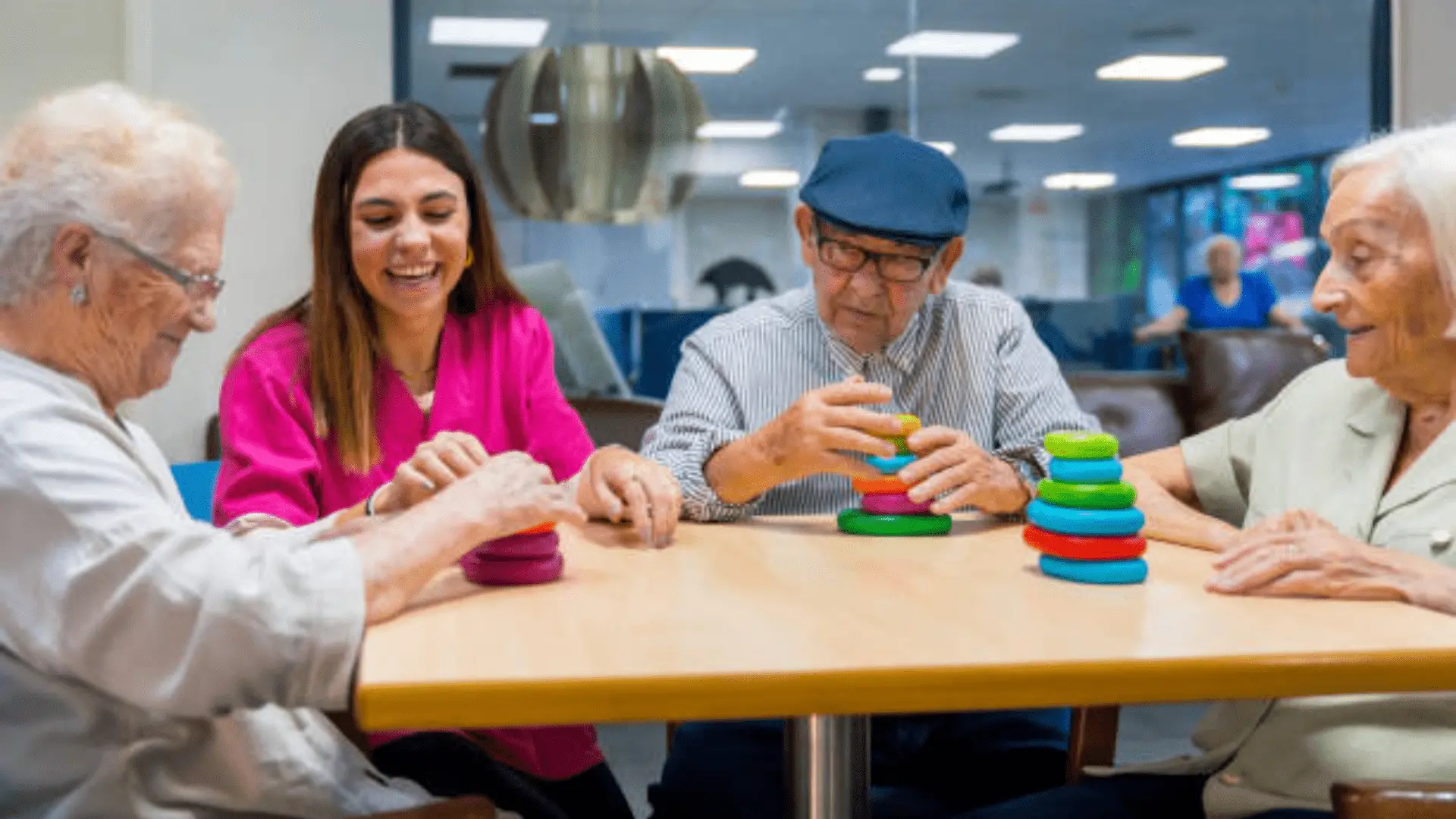
The “Game Board of Champions” hangs by the doorway. Residents smile when their names go up after Bingo, UNO, or dominoes. For quiet days, memory matching or large-print playing cards offer calm engagement.
Tips to include everyone:
- Provide large-type cards, non-slip mats, and card holders for arthritic hands.
- Rotate themes: “Bingo & Biscuits” Monday, “Cards & Cocoa” Wednesday, “Game Show Friday.”
- Keep sessions short and sweet. Celebrate small wins.
Why it works: Games encourage focus without pressure. They also revive the feeling of family game nights, which comforts many residents.
The Cinema: Movie Nights & Memory Viewings
We dim the lights. A vintage comedy flickers on. Popcorn in paper bags rustles across the room. After the movie, residents vote for next week’s pick and jot mini-reviews we post in the hall.
Keep it cozy:
- Offer blankets, soft pillows, and intermission trivia about the actors.
- Mix classics with seasonal themes.
- Try “Memory Viewings”—slideshows of life events, family photos (with permission), or retro commercials to spark rich conversations.
Why it works: Shared stories create shared identity. Watching together eases loneliness and invites gentle nostalgia.
The Garden: Nature Activities That Bring Purpose
On Tuesday mornings, we distribute tiny seed packets and biodegradable cups. Hands press soil down; someone hums. A few weeks later, herbs line the windowsill and the dining room smells like fresh mint.
Options for any ability:
- Container gardens, raised beds, windowsill herbs, or succulent pots.
- Make pine-cone bird feeders or simple bouquets for the tables.
- Assign “Garden Buddies” for watering and tending.
Why it works: Nature soothes. Growing and tending builds routine, purpose, and pride.
The Party: Dance Days & Themed Celebrations
No one sits out during “Disco Fever Friday.” Wheelchairs swivel, hands clap, scarves swirl. Birthday residents get a crown and a victory dance to their favorite song. The camera captures grins you can’t stage.
Easy touches:
- Choose inclusive themes: 1950s sock hop, Motown magic, luau leis, pajama party.
- Provide props—hats, sunglasses, colorful scarves, and noisemakers.
- Invite families. Joy multiplies when generations dance together.
Why it works: Movement plus music plus togetherness is a proven mood lifter. Even shy residents often join when the room is laughing.
Bonus Joy: Goodie Bags That Double as Activities
For holidays or welcome gifts, we assemble small bags that keep giving:
- Jumbo playing cards
- Puzzle books and a comfy grip pen
- Pocket flashlight and reading glasses
- Travel-size lotion or body wash with soft scents
- DVD of a classic comedy for a shared watch
- Seed packets plus a paper cup for a starter plant
Tip: Turn unwrapping into a social hour, then use the items right away—play a round of cards, plant seeds together, or start the puzzle page one.
The Daily Rhythm: Four Categories That Keep Days Balanced
A powerful way to plan nursing home activities for seniors is to choose four touchpoints each day:
- Productive: folding towels, watering plants, setting placemats—tasks that say “I contribute.”
- Self-Care: chair yoga, gentle stretches, or a brain puzzle—caring for body and mind.
- Leisure: music, crafts, games—pure enjoyment that builds connection.
- Rest & Relaxation: aromatherapy, soft music, quiet reading—time to unwind.
This rhythm respects energy levels, reduces agitation, and helps nights go smoother because days feel meaningful.
Safety, Dignity, and Small Details That Matter
- Offer choices. A “Would you like A or B?” approach preserves agency.
- Keep sessions short. End on a high note so residents want to return.
- Adapt everything. Seated versions, larger tools, simpler steps—success is the goal.
- Capture wins. A photo board of activities keeps good feelings visible between events.
Final Thought
When we center nursing home activities for seniors on joy, dignity, and belonging, little moments become medicine. A lyric remembered, a seed sprouting on a windowsill, a gentle stretch that eases a stiff shoulder—these are the glimmers that turn an ordinary day into something worth talking about tomorrow. Keep it simple. Keep it human. And watch the room change.

Leave a Reply