


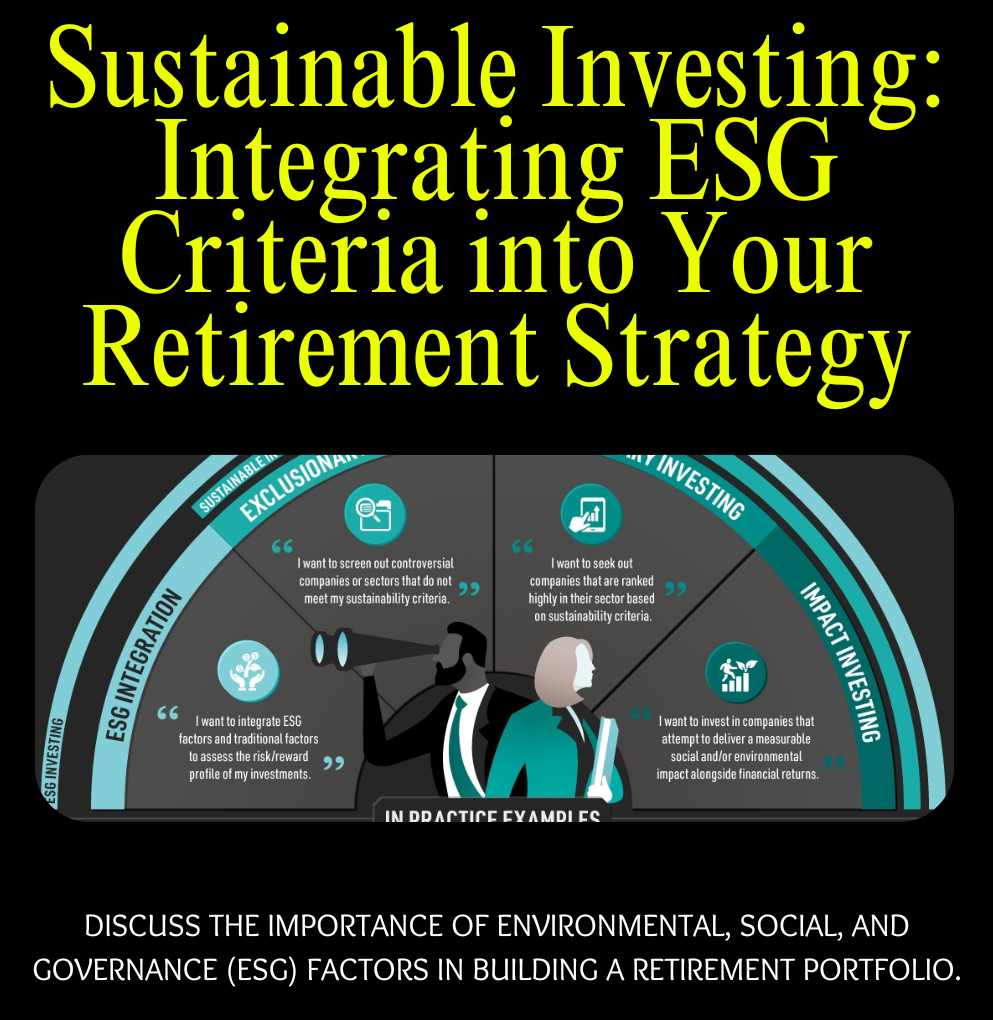
In the modern financial landscape, integrating ESG—environmental, social, and governance—factors in your investment and retirement planning are critical. Besides aligning with personal values, sustainable investing addresses long-term risks and opportunities.
This paper will present some of the benefits of ESG investments and provide insight and practical guidance. Discussing ways one might incorporate ESG considerations into investment strategies. Whether an investor is a plan sponsor or a single individual, gaining an understanding of ESG integration will significantly help in optimising both financial returns and societal impact.
What is ESG Investing?
ESG investing incorporates environmental, social, and governance issues into the investment decision-making process. It deals with how a business conducts activities regarding the environment. Taking into account its relations with employees, suppliers, customers, and communities around which it operates. As well as how it governs through leadership, executive rewards, auditing, internal controls, and shareholder rights.
Integrating ESG factors into the investment process enables the identification of potential risks and opportunities that traditional financial analysis cannot capture. This represents an approach to responsible investing that seeks to achieve sustainable financial returns while supporting positive societal impact.
Why Should You Consider ESG Factors in Your Investment Plan?
There are innumerable advantages of ESG investing for both the investor and society. These show a much more complete picture of corporate long-term viability and potential for sustainable growth. Joining the traditional analysis of financials with ESG factors may lead to robust assessments of the risks and opportunities associated with investments.
- Risk Management: ESG can put pressure on the potential risks resulting from harmful environmental impact, poor social practices, and weak governance structures, all of which could dilute the performance and reputation of a company.
- Sustainable Returns: Companies that report on ESG issues tend to have the management strength— laying the foundations for long-term financial performance.
- Aligning with values: Using ESG investing, individuals or institutions would be able to position themselves respectively, and their portfolios will genuinely be able to act out their personal or organisational value set associated with social and environmental responsibility.
How to Integrate ESG into Your Retirement Plan
The process of integrating ESG into a retirement plan requires several steps to identify and invest in secure, sustainable, long-term business activities. Here’s how:
- Assess ESG criteria: The first step should be to recognise which ESG criteria are most relevant to you or your organisation. These could include climate change, human rights, corporate governance, community impact, and so on.
- Evaluate ESG Funds: Be on the lookout for investment funds, such as mutual funds and ETFs, that place a premium on ESG factors. Essentially, these are investment vehicles whose constituent investments will be picked in line with sustainability criteria based on ESG.
- Consult advisors: You may want to go with an independent investment consultant or advisor. There are so many experts in ESG investment; this step will enable you to explore your available options in ESG and design an investment strategy in keeping with your goals.
- Incorporate ESG into Policy: Inserting ESG considerations into the investment policy statement is what ensures, from a practical point of view, that ESG factors will have a systematic way of becoming part of the investment decision-making process for plan sponsors.
What Are the Benefits of Sustainable Investing?
Sustainable investing provides a range of benefits that extend beyond financial returns:
- Improved Risk Management: Integrating ESG into the investment process enables investors to identify and calibrate the risks linked with environmental impact, social issues, and governance practices. The proactive approach helps safeguard investments against unexpected hurdles.
- Long-term Value Creation: If a firm focuses on sustainability, it will be much better placed for long-term success. Often, this has manifested in solid production performance, resilience to market volatility, and adjustment to regulatory changes.
- Positive Impact: ESG investing favours companies conducting business in ways that support social welfare and ecological sustainability. Investors can make a positive difference by shifting capital toward responsible companies.
How Do ESG Factors Influence Investment Decisions?
ESG factors influence investment decisions by providing additional layers of analysis that complement traditional financial metrics. Here’s how they shape the investment process:
- ESG Data Analysis: This is the benchmark of performance that investors use to evaluate a company on environmental, social, and governance issues. It ranges from carbon footprint through labor practices to board diversity.
- Integration into valuation models: The ESG considerations can be integrated into valuation models likely to affect a company’s financial performance metrics. This could be as varied as determining the impact that ESG risks or opportunities have on the future cash flow and profitability of a firm.
- Active Engagement: Investors engage in active voice-of-customer activities with companies on improving their ESG practices through activities such as VOF, engaging in dialogues with management, and advocating improved ESG policies.
Case Studies: Successful ESG Integration
Examining case studies of successful ESG integration provides valuable insights into the benefits and challenges of sustainable investing. Here are a few examples:
- Corporate Retirement Plans: Few corporate retirement plans have successfully integrated ESG factors into participant plan options. Financially good performance with a more sustainable world.
- Institutional Investors: Large institutional investors, such as pension funds and endowments, have adopted ESG investing principles. It allows to enhance long-term returns while mitigating risk. These investors gained by improving their bottom line of financial results while helping further the advancement of ESG standards worldwide.
- Impact Investing: An investment approach that aims to generate and measure both social and environmental impact and financial returns. In terms of successful examples of projects that impact investment funds have supported, there are the areas of renewable energy, affordable housing, education, et cetera—illustrating what ESG integration can do to be a potent driver of positive change.
How to Choose the Right ESG Investment Options
Choosing the right ESG investment options involves evaluating various factors to ensure alignment with your goals and values:
- Know the ESG Criteria: Determine which ESG criteria matter the most to you, such as environmental sustainability, social responsibility, or governance practices.
- Research ESG Funds: Research mutual funds, ETFs, and other investment products that integrate ESG considerations into their investment process. Look for funds with high past performance and excellent commitment to the ESG ideals.
- Fund Manager: Assess the expertise and experience of fund managers in ESG investing. Experienced managers are better at dealing with the complexities of integrating ESG factors into investment decisions.
The Role of Plan Sponsors in Promoting ESG
Plan sponsors play a critical role in promoting ESG investing within retirement plans. Here’s how they can contribute:
- Incorporate ESG into the Investment Policy: ESG should be factored within the investment policy statement adopted by plan sponsors. This ensures that ESG aspects are not only considered but have been explicitly bargained for systematic incorporation into the decision process of an investment.
- Offer ESG Options: Offer participants options for making ESG investments that align with their values in retirement savings. This can be through a mutual fund, ETF, or other investment products where securities are selected based on ESG criteria.
- Educate Participants: Plan sponsors could educate plan participants about the benefits of ESG investing. Explain how participants can incorporate ESG considerations into their retirement savings strategy. This will enable participants to make informed decisions concerning their investments.
Future Trends in ESG Investing
The future of ESG investing is promising, with several trends likely to shape the landscape:
- Increasing Demand for ESG: There is a fast-growing demand from individual and institutional investors seeking ESG investment options. This trend is driven by increasing awareness about sustainability and responsible investing.
- ESG Data Advancements: Availability and quality improvement of data will enable investors to make informed decisions. With advanced technology and data analytics tools, more accurate and granular ESG information will be available.
- Regulatory Developments: The regulatory changes could probably support ESG’s increasing investment growth. Most governments and regulatory bodies are increasingly recognising the importance of ESG factors and may introduce policies encouraging ESG integration.

Leave a Reply