


Understanding Diversification
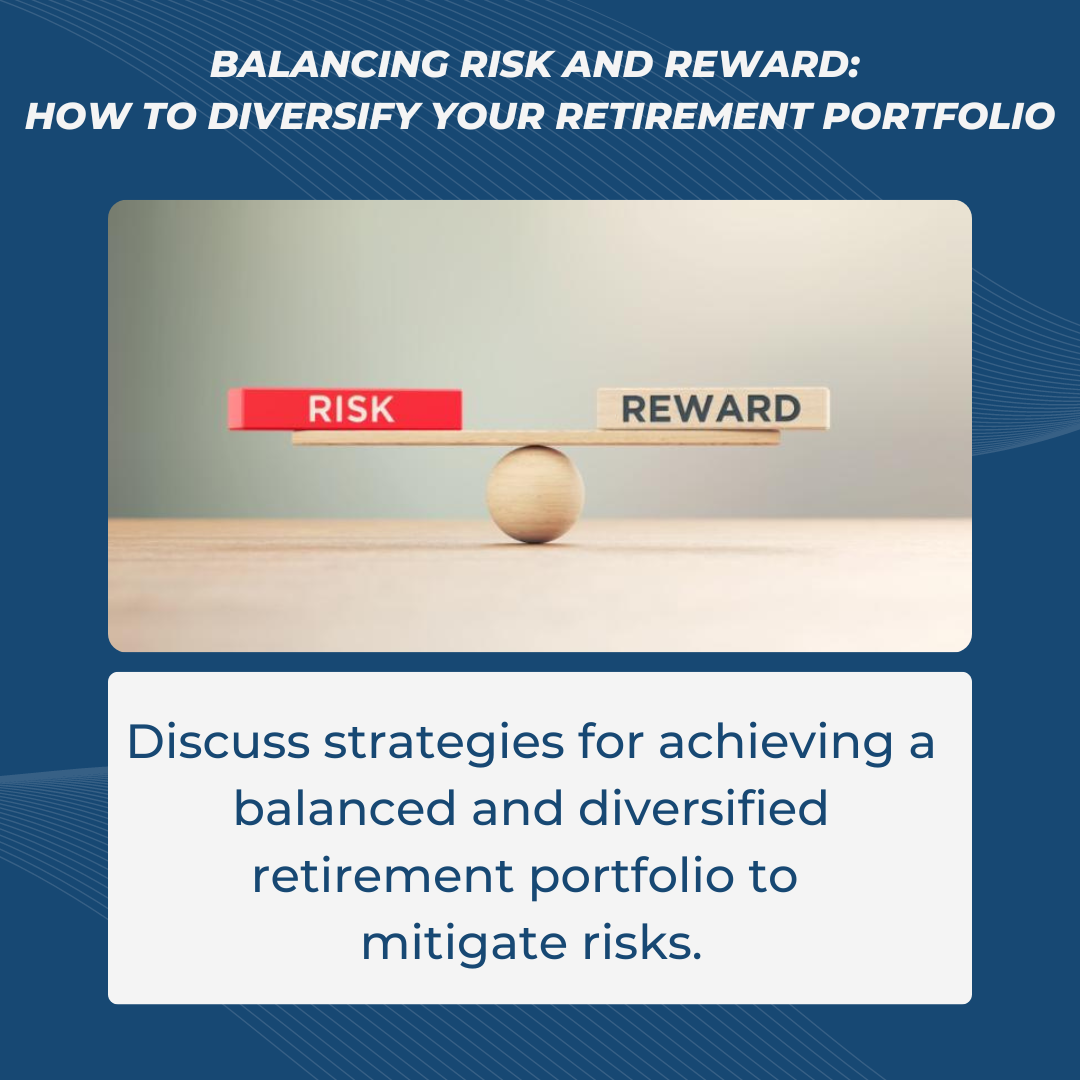
One can understand that planning for retirement is not merely about putting money aside; it is a lot more—”to grow your investments while balancing risk and reward risks.” A critical concept in balancing risk and reward that is diversification.
With a diversified retirement portfolio, the risk will be spread across various asset classes. Thus, any market volatility is unlikely to affect your overall retirement savings significantly. This paper discusses different strategies for maintaining a balanced and diversified portfolio for retirement.
Benefits of Diversification
It simply means spreading investments across different asset classes, sectors, and geographies to reduce the risk factor. In other words, diversification is a method of risk reduction by assuming that a collection or variety of investments could counterbalance poor performance elsewhere, as one ill-performing asset class or sector would likely be offset by another performing well to lend stability to the overall portfolio.
1. Risk Reduction
The principal advantage of diversification is risk reduction. A portfolio diversified across asset classes, like stocks, bonds, real estate, and cash, will help you cushion the impact on overall retirement savings from a downturn in any investment.
2. Smoother Returns
This can also lead to smoother returns over time. While individual investments can be quite volatile, a diversified portfolio will be much more stable; gains from one area compensate for losses from another.
3. Opportunity for Growth
A diversified portfolio also provides the opportunity for growth by including a mix of investments with varying risk levels. This allows you to take advantage of higher-risk, higher-reward investments while still maintaining a level of stability through lower-risk assets.
Strategies for Diversifying Your Retirement Portfolio
1. Asset Allocation
It’s dividing your investment portfolio between different asset categories, such as stocks, bonds, and cash. The proper allocation depends on one’s risk tolerance, time horizon, and the nature of the financial goals. One of the general strategies is that a higher percentage should be given to stocks when you are young and shift more towards bonds and other fixed-income securities as you approach retirement.
2. Invest in a Mix of Stocks and Bonds
The two primary asset classes comprise most retirement portfolios: stocks and bonds. Stocks provide higher potential returns but at a higher risk, while bonds offer a stable income with lower risk. A balance between the two can offer a way to help manage your risk while providing growth potential.
3. Include Real Estate Investments
It can be an excellent addition to any diversified portfolio. Real estate investments, including REITs, pay out income as dividends and offer capital appreciation. Also, since this asset class has a low correlation with stocks and bonds, it might help reduce portfolio risk.
4. Diversify Within Asset Classes
It should not be restricted to diversification between asset classes but even within an asset class. For example, if you invest in stock, there can be diversification into technology, healthcare, or consumer goods sectors. Similarly, in the case of bonds also, one can have investments in government bonds, corporate bonds, and municipal bonds and add more to the diversification.
5. Consider International Investments
Adding international investments to your portfolio exposes you to various markets that may put up different performances from the domestic front. This helps in increasing diversification and reduces over-reliance on a particular economy in case of an economic downturn. Consider investing in international stocks, bonds, and mutual funds to diversify globally.
6. Use Mutual Funds and ETFs
Mutual funds and ETFs are two of the easiest ways to diversify. The funds pool money from many investors to purchase a broad array of securities, thereby providing instant diversification. Look for funds that suit your investment strategy, be it index funds—they will help you passively track any particular market index purely by mirroring its companies—or actively managed funds striving to beat the market.
7. Rebalance Regularly
As time passes, investment performance could naturally cause your portfolio to shift away from the target mix. You must rebalance time again so that you continue balancing risk and rewards targets. This means selling some of those assets that have appreciated the most in value and buying more of those that have slumped a bit to reshape your original position.
Conclusion
Diversification of the retirement portfolio is essential in balancing risk and reward ratio. In this process, you will get your money organized and reduce the impacts of market volatility while attaining more stable returns from within different asset classes, sectors, and geographical locations.
Be sure to reflect on your risk tolerance, time horizon, and financial goals while structuring your portfolio and rebalancing periodically to stay invested at your target allocation. With an appropriately diversified portfolio, you will have given your retirement goals a good run with reduced risks.

Leave a Reply