


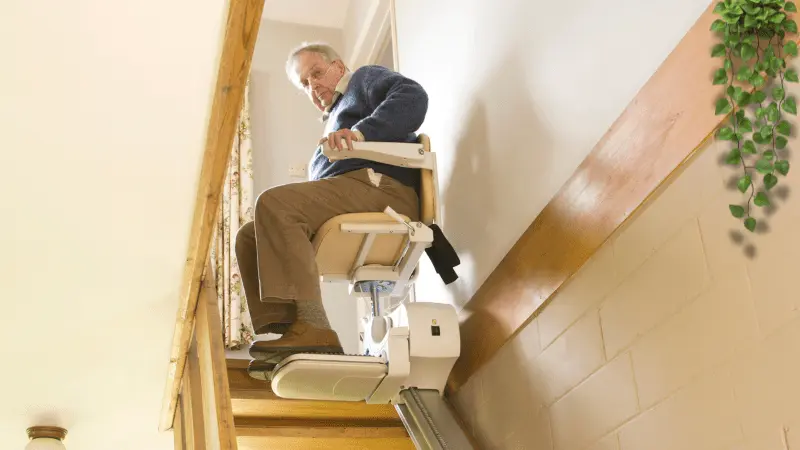
For most of us, “home” isn’t just a building; it’s a collection of memories. But when a flight of stairs begins to feel like a mountain range, that home can start to feel like a cage. If you’ve been searching for a stair lift for seniors covered by Medicare, you’ve likely encountered a wall of confusing jargon and conflicting advice.
In this 2026 definitive guide, we’re going to tear down that wall. We will look at why Original Medicare says “no,” which private plans are finally saying “yes,” and exactly how much you can expect to pay for independence this year.
Strategic Executive Summary
If you’re looking for a quick answer, here’s the reality as of January 2026: Original Medicare (Part A and Part B) does not cover stair lifts. They are classified as “home modifications,” not medical equipment. However, the landscape has changed significantly in the last 12 months.
Key 2026 Takeaways:
-
Medicare Advantage (Part C): Approximately 35% of plans now offer “Bathroom and Home Safety” allowances ranging from $500 to $2,500.
-
The VA Goldmine: Veterans can now access HISA grants up to $6,800—often enough to cover a standard straight lift entirely.
-
Medicaid Waivers: 48 states now offer “Nursing Home Diversion” programs that will pay for a lift if it keeps you out of a facility.
-
2026 Pricing: Expect to pay $3,800 – $7,500 for a straight rail and $12,000 – $18,000 for a custom curved rail.
Our Promise: By the end of this resource, you won’t just understand the policy—you’ll have a step-by-step roadmap to funding your mobility without draining your savings.
1. Why Doesn’t Medicare Cover Stair Lifts in 2026?
It is the question I hear most often: “If Medicare covers a $20,000 surgery, why won’t they cover a $4,000 chair that prevents the fall in the first place?” The answer lies in the definition of Durable Medical Equipment (DME). For an item to be covered under Medicare Part B, it must be “primarily and customarily used to serve a medical purpose.”
Medicare’s current stance—which has remained rigid even into 2026—is that a stair lift is a structural modification to the home. Because the rail is bolted to your stairs, it “becomes part of the house.” In their eyes, it’s no different than a new set of cabinets or a walk-in tub.
The 2026 “Medically Necessary” Myth
You might see websites claiming that a “Letter of Medical Necessity” will force Medicare to pay. This is false. I have seen hundreds of seniors submit detailed letters from their cardiologists and orthopedic surgeons, only to be denied. Unless there is a massive shift in federal law later this year, do not count on Original Medicare for a single penny of your stair lift cost.
2. Medicare Advantage (Part C): The 2026 Turning Point
While Original Medicare remains stuck in the past, Medicare Advantage (MA) plans are evolving. Because these plans are run by private insurers (like UnitedHealthcare, Humana, or Aetna), they have more flexibility.
In 2026, many MA plans have realized that paying $2,000 for a stair lift is much cheaper than paying $60,000 for a hip replacement. Look for these specific terms in your Evidence of Coverage (EOC):
-
SSBCI (Special Supplemental Benefits for the Chronically Ill): These are benefits for those with conditions like CHF or COPD.
-
Home Environmental Lead-Abatement: Occasionally used to cover accessibility.
-
Over-the-Counter (OTC) Plus: Some plans now allow you to “roll over” unused OTC funds into a home safety bank.
3. The Real Cost of a Stair Lift in 2026
Pricing has stabilized after the supply chain chaos of the early 2020s, but labor costs for installation are at an all-time high.
2026 Pricing Comparison Table
The “Hidden” Expenses
When budgeting, I always tell my clients to set aside an extra $1,000. Why?
-
Electrical Work: Most 2026 models require a dedicated outlet. If you don’t have one near the stairs, an electrician will charge $400–$600.
-
Permits: Some municipalities now require a “Mechanical Permit” for stair lift installation.
-
Bariatric Upgrades: If the user is over 300 lbs, you need a heavy-duty motor, adding 20% to the base price.
4. Alternative Funding: How to Get a Lift for $0
If Medicare isn’t the answer, what is? There are four major “backdoor” ways to fund your lift in 2026.
A. The VA Gold Standard
If you are a veteran, stop looking at Medicare. The Department of Veterans Affairs offers the most generous mobility grants in history.
-
HISA Grants: In 2026, these provide up to $6,800 for service-connected conditions.
-
SAH Grants: For severe disabilities, these can reach over $126,000.
-
Aid & Attendance: This monthly pension top-up can easily cover the monthly financing for a lift.
B. Medicaid HCBS Waivers
Medicaid is the unsung hero of home modifications. Most states operate Home and Community-Based Services (HCBS) waivers. These programs are specifically designed to keep seniors in their homes and out of expensive nursing facilities.
If you qualify for your state’s “Waiver,” the program will often cover 100% of the cost of a straight stair lift. However, be warned: waitlists in states like Florida or Texas can be 12–18 months long.
C. IRS Publication 502: The Tax Hack
Did you know your stair lift might be a tax deduction? In 2026, if a doctor prescribes the lift to alleviate a specific medical condition, the cost (minus any increase in your home’s value) is a deductible medical expense.
Pro Tip: Usually, a stair lift decreases or has a neutral effect on home value for the general market, meaning you can often deduct the entire cost if your medical expenses exceed 7.5% of your AGI.
D. State Grants and “Rebuilding Together”
Check with your local Area Agency on Aging. Non-profits like Rebuilding Together often have “Safe at Home” programs that provide free or low-cost lifts for low-income seniors.
5. Honest 2026 Brand Assessments
I’ve seen them all—the good, the bad, and the squeaky. Here is my honest assessment of the 2026 market leaders.
1. Bruno (The “Workhorse”)
-
Best For: Overall reliability and weight capacity.
-
Pros: Made in the USA, slimmest rail on the market, excellent 2026 warranty.
-
Cons: Higher price point; they do not sell directly to consumers (dealer only).
2. Stannah (The “Designer”)
-
Best For: Aesthetics and curved stairs.
-
Pros: Hundreds of upholstery options; the “Starla” model is the most comfortable chair I’ve ever sat in.
-
Cons: Most expensive in the “Curved” category.
3. AmeriGlide (The “Budget”)
-
Best For: DIY-ers and tight budgets.
-
Pros: You can buy them online for $1,900 and install them yourself (if you’re handy).
-
Cons: Limited warranty if you self-install; the ride is noticeably “jerkier” than a Bruno.
6. Case Studies: Real Stories from the Field
Case Study #1: The “Medicare Advantage” Win
-
The User: Margaret, 78, from Ohio.
-
The Situation: Needed a straight lift due to severe COPD.
-
The Funding: Her 2026 Medicare Advantage plan offered a $1,500 “Flex Allowance.” She combined this with a 0% interest financing plan for the remaining $2,300.
-
Outcome: Monthly payment of $65 for 3 years. She stayed in her home.
Case Study #2: The “VA Loophole”
-
The User: Robert, 82, Korean War Vet.
-
The Situation: Needed a curved lift ($14,000) for his split-level home.
-
The Funding: He applied for a HISA grant ($6,800) and used his “Aid & Attendance” back pay to cover the rest.
-
Outcome: $0 out of pocket.
Case Study #3: The “DIY Disaster”
-
The User: Anonymous.
-
The Situation: Bought a used lift on Facebook Marketplace for $500.
-
The Problem: The rail was 2 inches too short. He tried to “splice” it. The lift motor burned out in three weeks.
-
Lesson: Never buy a used rail unless it was specifically measured for your exact number of steps.
7. How to Spot a Stair Lift Scam in 2026
As the senior population grows, so do the scammers. Protect yourself with these rules:
-
The “Phone Quote” Trap: If a company gives you a firm price without seeing your stairs, hang up.
-
The “Lifetime” Lie: Many companies offer a “Lifetime Warranty” that only covers the motor. In 2026, the electronics and batteries are what usually fail. Ensure your warranty covers labor for at least 1 year.
-
The Pressure Cooker: If a salesperson says “this price is only good for today,” show them the door.
8. Comprehensive FAQ
Q: Does Medicare cover the maintenance of a stair lift? A: No. Since they don’t cover the lift, they won’t cover the $200 annual service call or the $150 battery replacement.
Q: Can I rent a stair lift? A: Yes! In 2026, rentals are popular for post-surgery recovery. Expect to pay a $500 installation fee and $300/month.
Q: Will a stair lift damage my walls? A: This is a common myth. Stair lifts are bolted to the stair treads, not the wall. If you remove the lift, you’ll just have a few small holes in your carpet or wood, which are easily filled.
Q: How long do the batteries last? A: Typically 2–3 years. In 2026, most models use a continuous charging strip, but if you leave the chair “off the park,” the battery will drain.
Q: What happens during a power outage? A: Every modern 2026 lift has a backup battery. You will typically get 10–20 trips up and down even if the neighborhood is dark.
Conclusion: Don’t Wait for the Fall
The stairs aren’t getting shorter, and your safety shouldn’t be a gamble. While the lack of Original Medicare coverage is a hurdle, the 2026 landscape of Medicare Advantage allowances and VA grants makes independence more affordable than ever.
Investing in a stair lift isn’t about “giving in” to old age; it’s about taking control of your environment so you can keep making memories in the home you love.
Would you like me to find the specific 2026 Medicaid Waiver contact for your state, or should I generate a “Questions to Ask the Dealer” printable checklist for your in-home estimate?

Leave a Reply